Camel’s underground music play, played under the rules.
What surrounds the ad can matter as much as the ad itself.
R.J. Reynolds wanted a national independent-music marketing program for Camel that reached independent-music fans without violating federal law. The Master Settlement Agreement allowed no sponsorship, no merchandise, no billboards, no transit, no product placement — enforced by 46 state attorneys general who could sue, and regularly did. And the audience was exactly the one the settlement existed to protect. Everything that made them worth reaching is what made reaching them illegal.
Compliance was the design
The markings weren’t optional and the MSA didn’t allow loopholes. Every visible piece of The FARM had to look like what it was: a tobacco-industry marketing program complying with federal law. Seven sections of the site needed writing, every month, and all of it cleared legal.
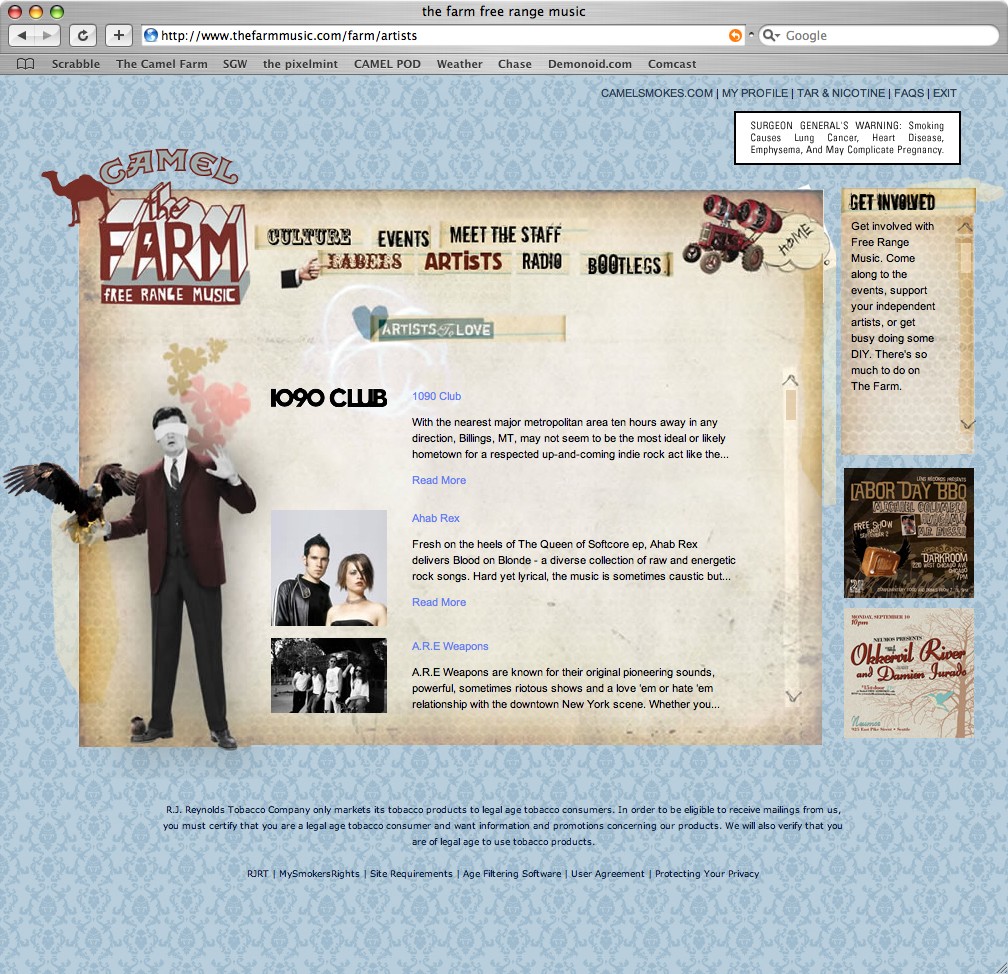
The CD compilation series
Compliance went deeper than artwork. Every song on every CD had to clear line by line. I read all the lyrics, listening for anything that could embarrass Camel — a metaphor about cancer, a line about dying, anything a state attorney general could hold up in court. The bands that didn’t print their lyrics, I transcribed by ear.
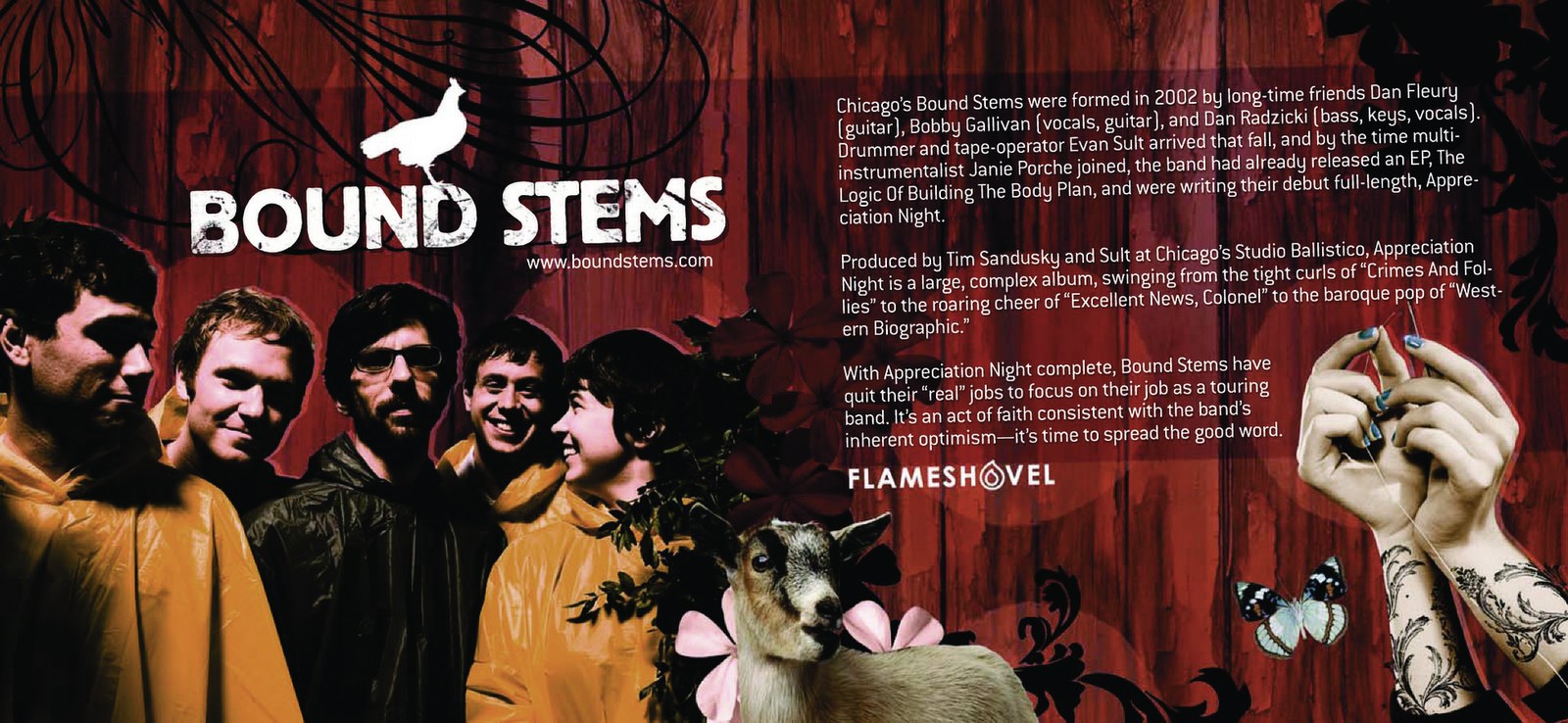
The Rolling Stone centerfold
Four panels, the warning on every one, running in the 40th anniversary issue. We had cleared our side of it completely.
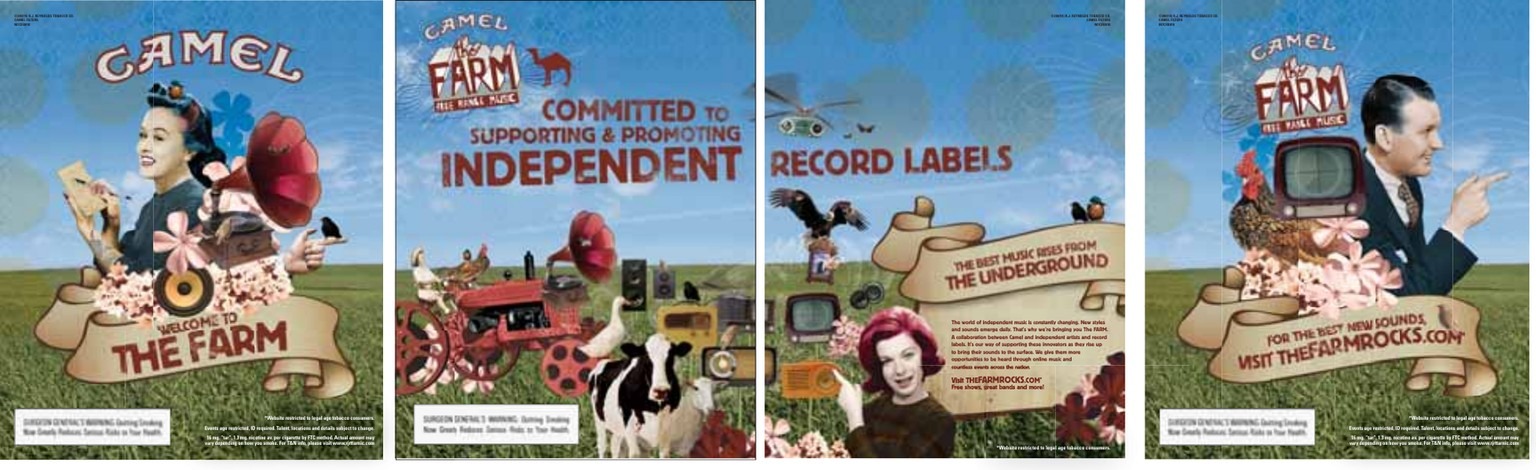
Then the blindside
Rolling Stone created their own illustrated “Indie Rock Universe” pages — robots, flying radios, a unicorn. The magazine placed our ad alongside that artwork. That combination violated the settlement’s ban on cartoons in advertising. R.J. Reynolds settled. The settlement included a permanent ban on advertising in publications with significant youth readership, and that was all she wrote for The FARM.
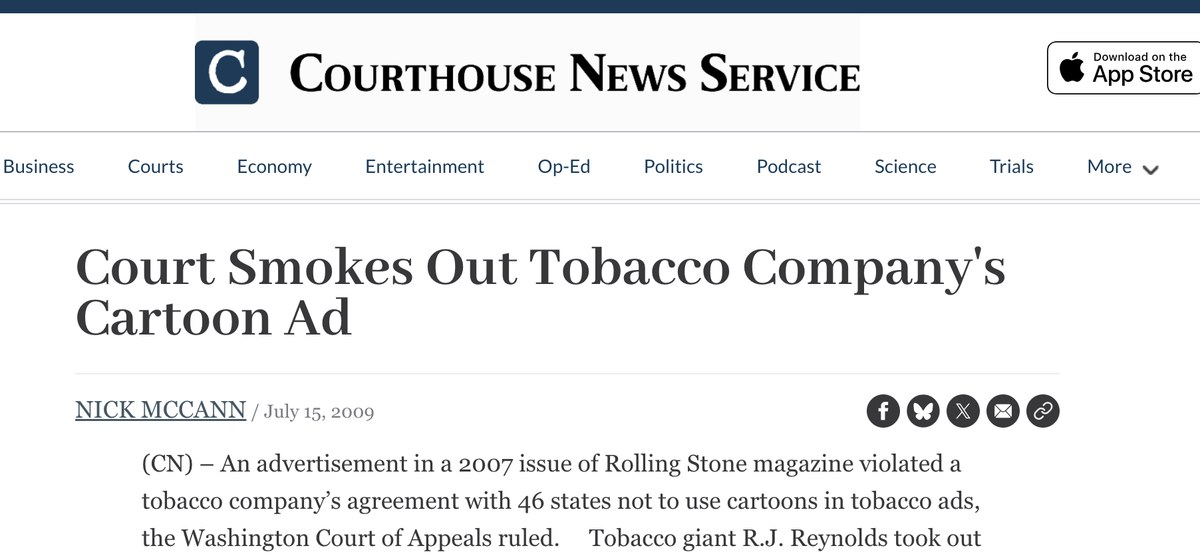
It was a costly reminder that in regulated work, there are blindsides.
Every figure here is verifiable. R.J. Reynolds’ internal records were made public under the Master Settlement Agreement, and 181 of them carry my name on the author line in the UCSF Industry Documents Library. Each one has a bates number and a permanent public URL.
The long version — five markets, seven sections, and every lyric cleared by hand

01The situation
R.J. Reynolds wanted a national independent-music marketing program for Camel that targeted independent-music fans without violating federal law. Sure, no sweat.
No sponsorship. No merchandise. No billboards, no transit, no product placement. Enforced by 46 state attorneys general who could sue (and regularly did, with gusto).
And the audience was exactly the one the settlement existed to protect. Young, culturally engaged, trend-influencing. Everything that made them worth reaching is what made reaching them illegal.
02What it returned
The numbers below come from R.J. Reynolds’ own program reviews and a commissioned consumer study. They are public record.
Across two program years: 122 events, 40,402 people through the door against 36,967 seats of venue capacity. The client’s own status report says the program was “constantly reaching capacity at its events.”
Every figure here is verifiable. R.J. Reynolds’ internal records were made public under the Master Settlement Agreement, and 181 of them carry my name on the author line in the UCSF Industry Documents Library: each one has a bates number and a permanent public URL. Here is one of them, bates 541436081.
03The program
Mess Marketing built it for R.J. Reynolds. It was called The FARM — "Free Range Music."
The premise: Camel would be the corporate underwriter of a national program supporting independent music and independent record labels.
Bands the program championed got real support. Marketing dollars went into shows, compilation releases, and an internal newsletter that gave the client team visibility into what their money was producing.
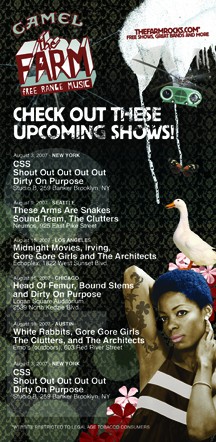
It ran in five major markets: New York, Austin, Seattle, Chicago, and Los Angeles. Each market had a local industry-relations manager and a local showcase venue partnership.
Every piece of FARM communication had to clear federal compliance review before it could go out. The Surgeon General's Warning was on every printed piece, every direct mail item, every public-facing surface.
Every site was walled behind real age verification. Not a checkbox, not a captcha. You had to prove you were a legal-age tobacco consumer to get in, and every mailing confirmed age before a single piece went out.
04What I built
I worked across every layer of the program, from production through delivery.
The Rolling Stone centerfold
The biggest single placement the program ever bought: a four-panel centerfold in the 40th anniversary issue. I wrote it.
Four panels, and the Surgeon General’s Warning had to appear on every one of them. That is the constraint the whole thing was built around.
The CD compilation series
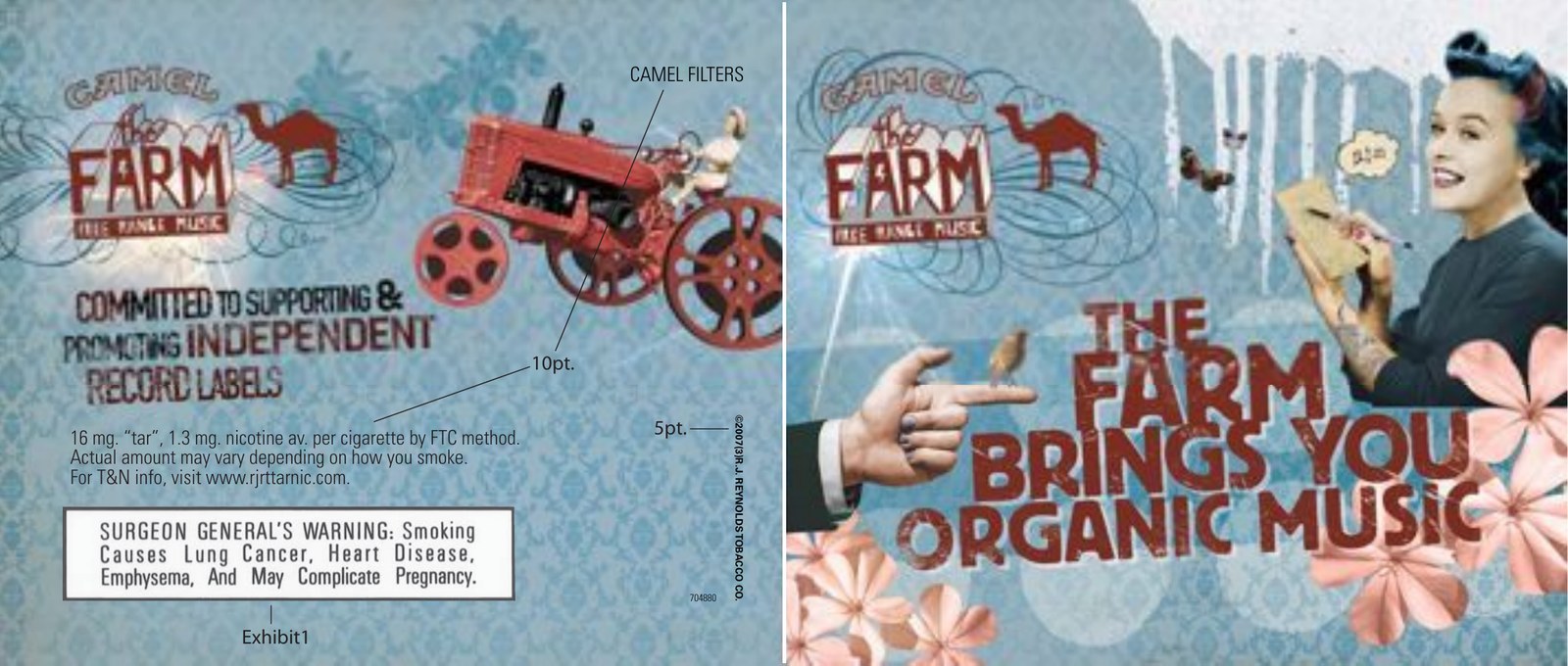
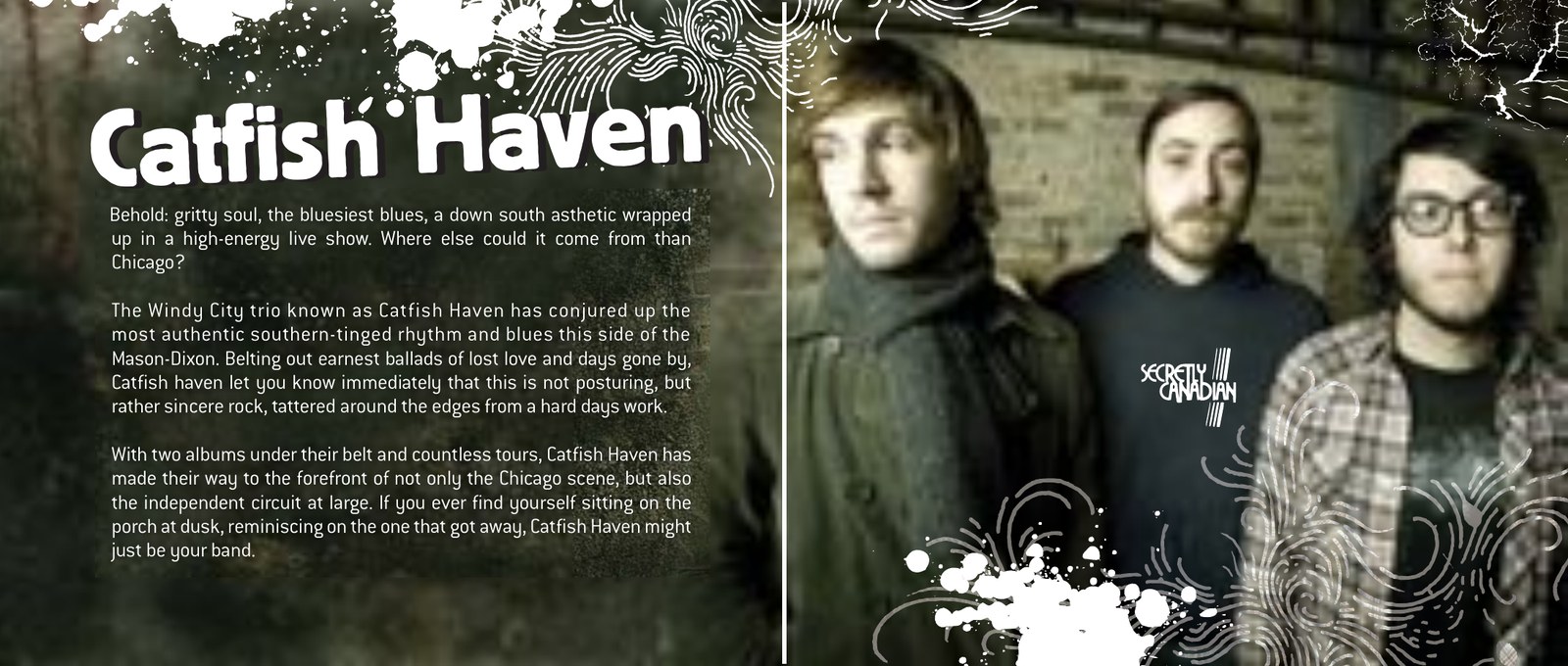
Curated compilation CDs, created for the program. Each CD came with a printed booklet featuring artist bios, photographed band imagery, and the full set of compliance markings every tobacco-industry piece required.
Compliance went deeper than the artwork. Every song on every CD had to clear, line by line. I read all of the lyrics, listening for anything that could embarrass Camel: a metaphor about cancer, a line about death or dying, anything a state attorney general could hold up in court. Some bands printed their lyrics in the sleeve. The ones that didn't, I transcribed by ear, word by word.
Inside the booklet, the artist bios I wrote ran across two-page spreads with band photography.
Real indie acts, with copy that respected them as artists and didn't condescend.
05Reporting back
The internal newsletter
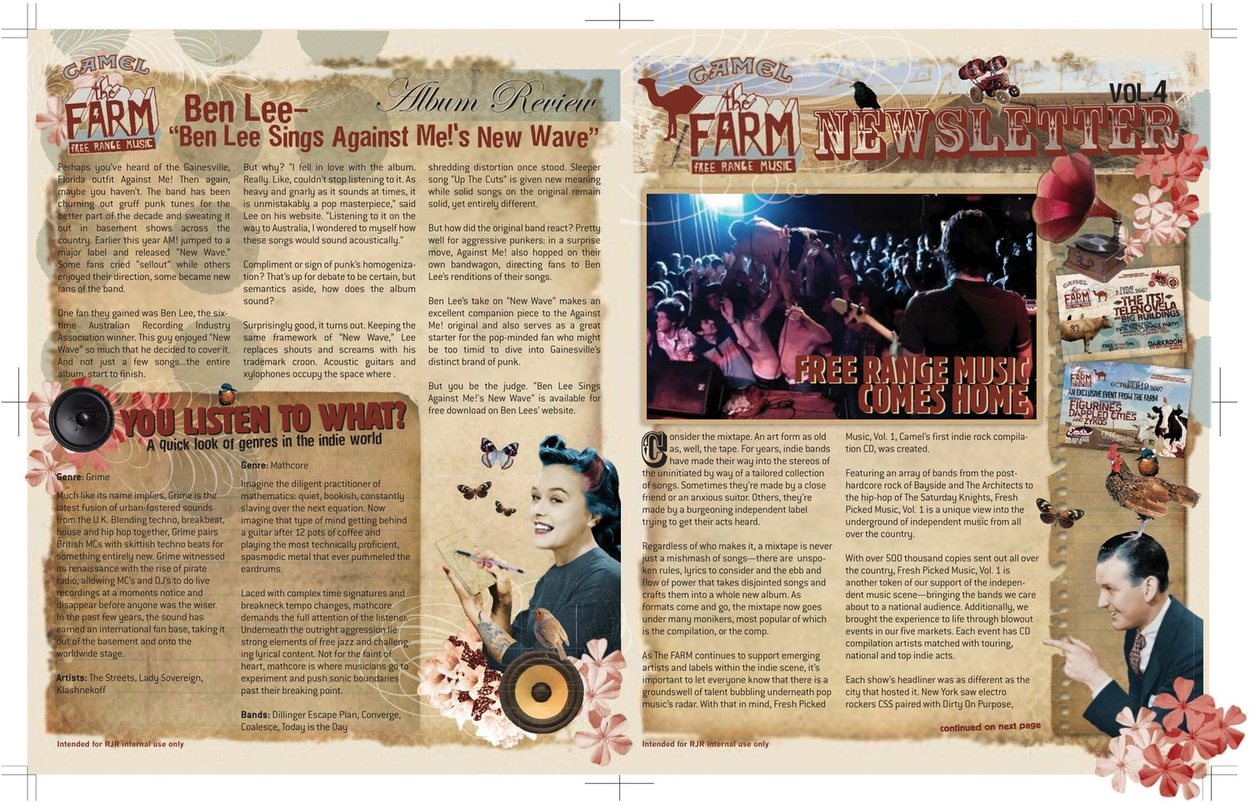
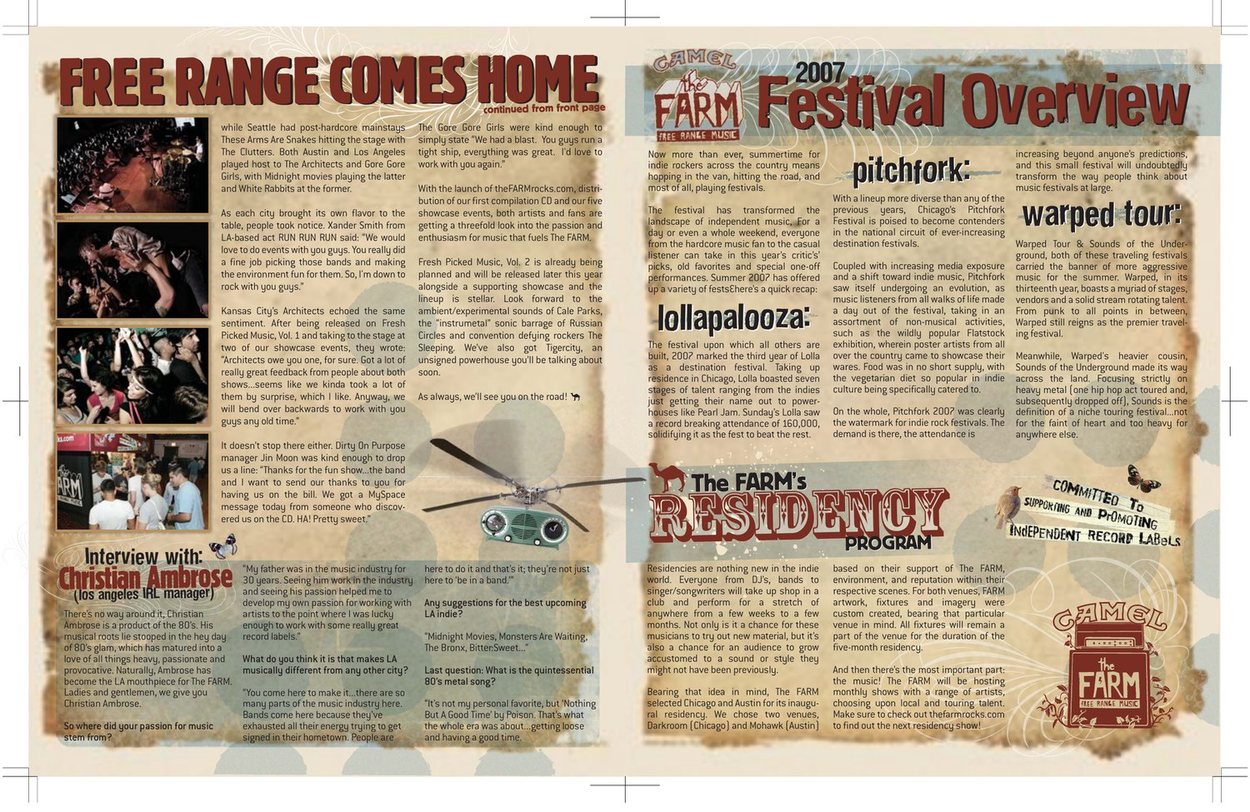
The FARM also produced a quarterly newsletter for R.J. Reynolds. Not for consumers, not for trade. Internal-only, and educational: coverage of the indie-music scene their dollars were supporting.
Festival recaps. Album reviews. Interviews with the program's industry-relations managers across the five markets.
The executive sizzle reel
We produced an annual executive sizzle reel for the brand. In short, a video summary of the year's activations, showcases, and partnerships. I flew to each market to conduct the interviews. I helped with scripting and storyboarding.
06The site
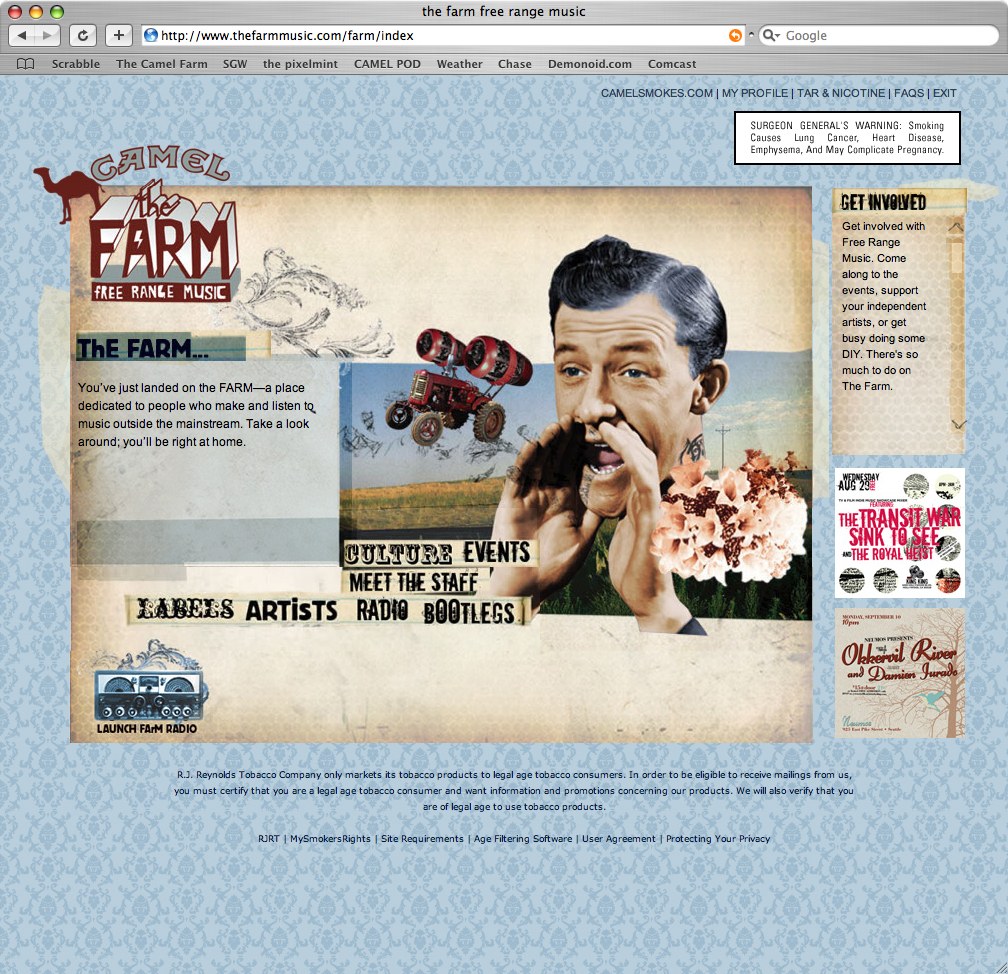
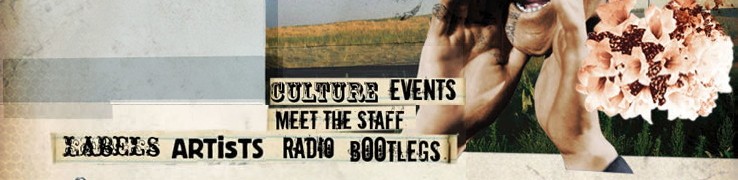
The program needed somewhere to live between events. What we built was a full editorial site: culture, events, labels, artists, radio, bootlegs, and a staff page. When it launched, every one of those sections needed writing. Band bios. Label bios. Market manager profiles. I wrote them.
On paper, I was the site’s editor. In practice, that meant everything came through me.
Each month, section managers sent me their content. Behind it all was a network of freelance writers and photographers across five markets, each with their own assignments, contracts, and deadlines.
I built the agenda, ran the editorial meeting, and worked with the director to get everything edited, proofed, and ready for R.J. Reynolds. Approvals and revisions came back the same way.
Underneath that ran a contracted network of freelance writers and photographers across the five markets. Signed agreements, assigned features, per-piece deadlines, and a column on the master calendar that just said Go to Kevin.
07What ended it
It was an ignominious end to years of work.
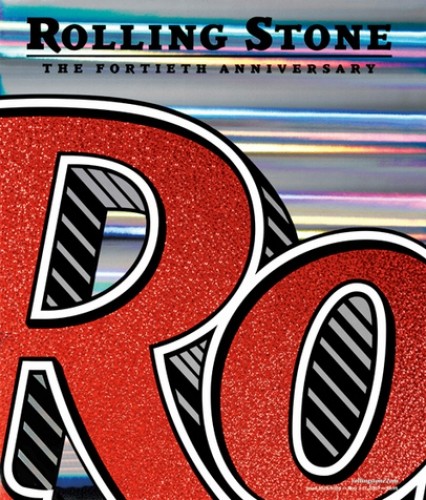
Rolling Stone created the illustrated “Indie Rock Universe” pages. And of course, it was a cartoon. Illustrations of robots, flying radios. I’m pretty sure there was a unicorn in there.
The magazine placed our ad alongside that artwork. That combination violated the tobacco settlement’s ban on cartoons in advertising.
Rolling Stone dropped the ball: it failed to flag how its editorial artwork would interact with a tightly regulated tobacco ad before the issue went to print. We never saw or controlled that artwork. So mea culpa, right?
Wrong.
R.J. Reynolds settled. The settlement included a permanent ban on advertising in publications with significant youth readership. And that was all she wrote for The FARM.