Two years of trying to say everything.
This was never a writing problem. Every review cycle added. No review cycle subtracted.
Credit insurance, debt protection, Payment Guard, and a pipeline of things not launched yet. The story had to hold for all of them at once, and in four directions: inside the company, out to credit unions, out to lenders, and eventually down to the borrower. The draft I inherited ran six pages under four competing section headers, with a dozen people in the margins.
The draft I inherited
One instruction repeated in four different places. Nobody had decided which proof points mattered, and the newest comment asked for more. Somebody deleted a period, and it got tracked.
I organised the feedback instead of adding to it
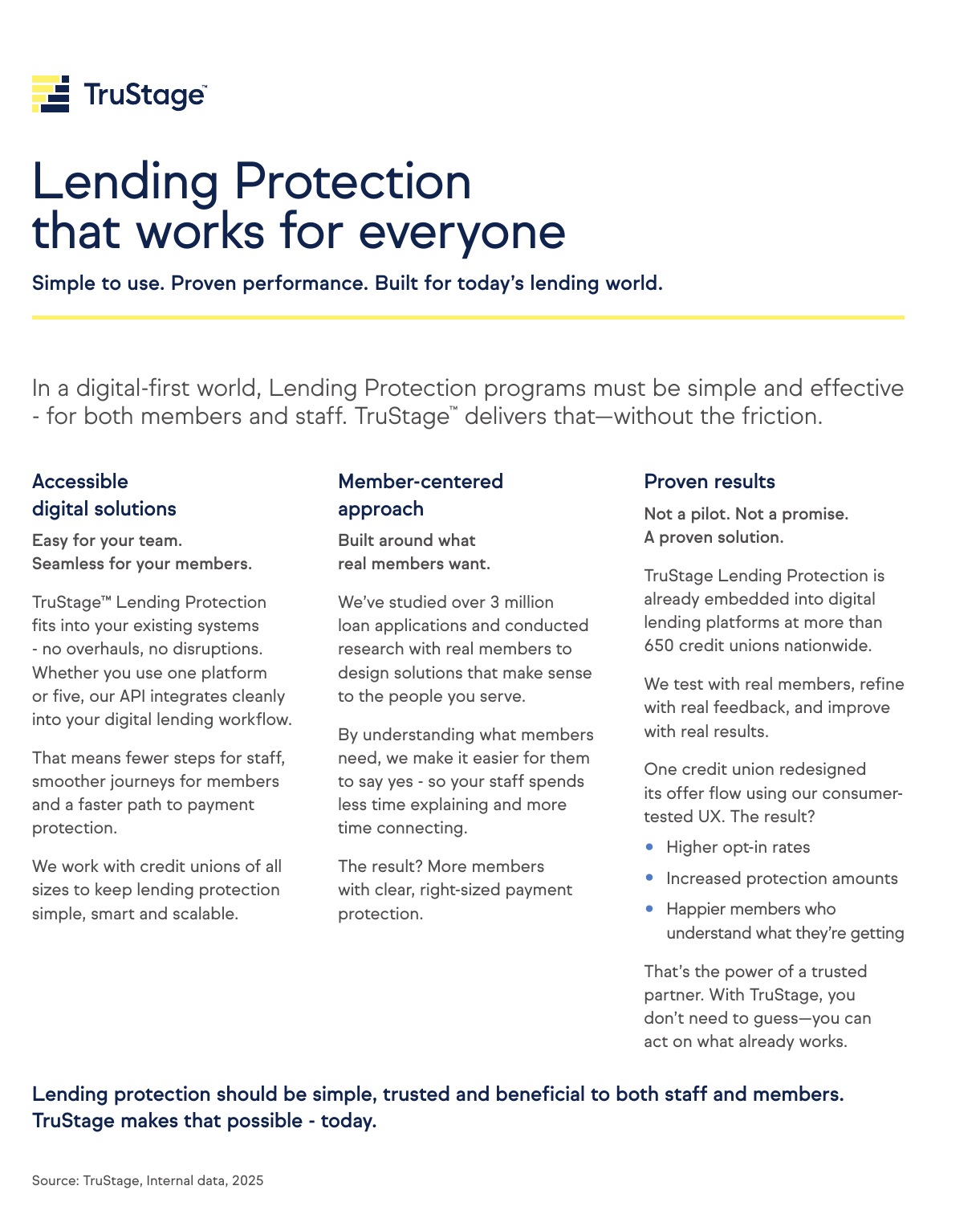
I sat in the room with the VP and collected every piece of feedback the project had accumulated. The strategy was to simplify the ask rather than build for every scenario at once. One narrative. Three pillars. One page. The test I set was an elevator pitch — a long elevator ride, sure, but you still have to get there before the doors open.

Then it got a visual form
Because that’s the half everyone skips. You cannot judge a story in a Word document — there’s no sense of how it will present, so it sprawls and your eyes go blurry. Three columns, one headline, and enough white space that a reader knows where to start and when they’re done. A story is only as good as the way it’s told. Eyes, ears, brain. It all has to work in concert.
When something has been stuck a long time, the work is rarely hard.
Validated by the VP of Marketing Strategy and the CMO. Sales rolled it out with 100% of the team on board. Then it started producing things — a framework earns its keep when other people can build on it without asking permission.
The long version — what was actually wrong, in three parts

01The situation
The products work. The business believes in them. And for two years, nobody could agree on how to describe any of it.
Not one product. A business unit.
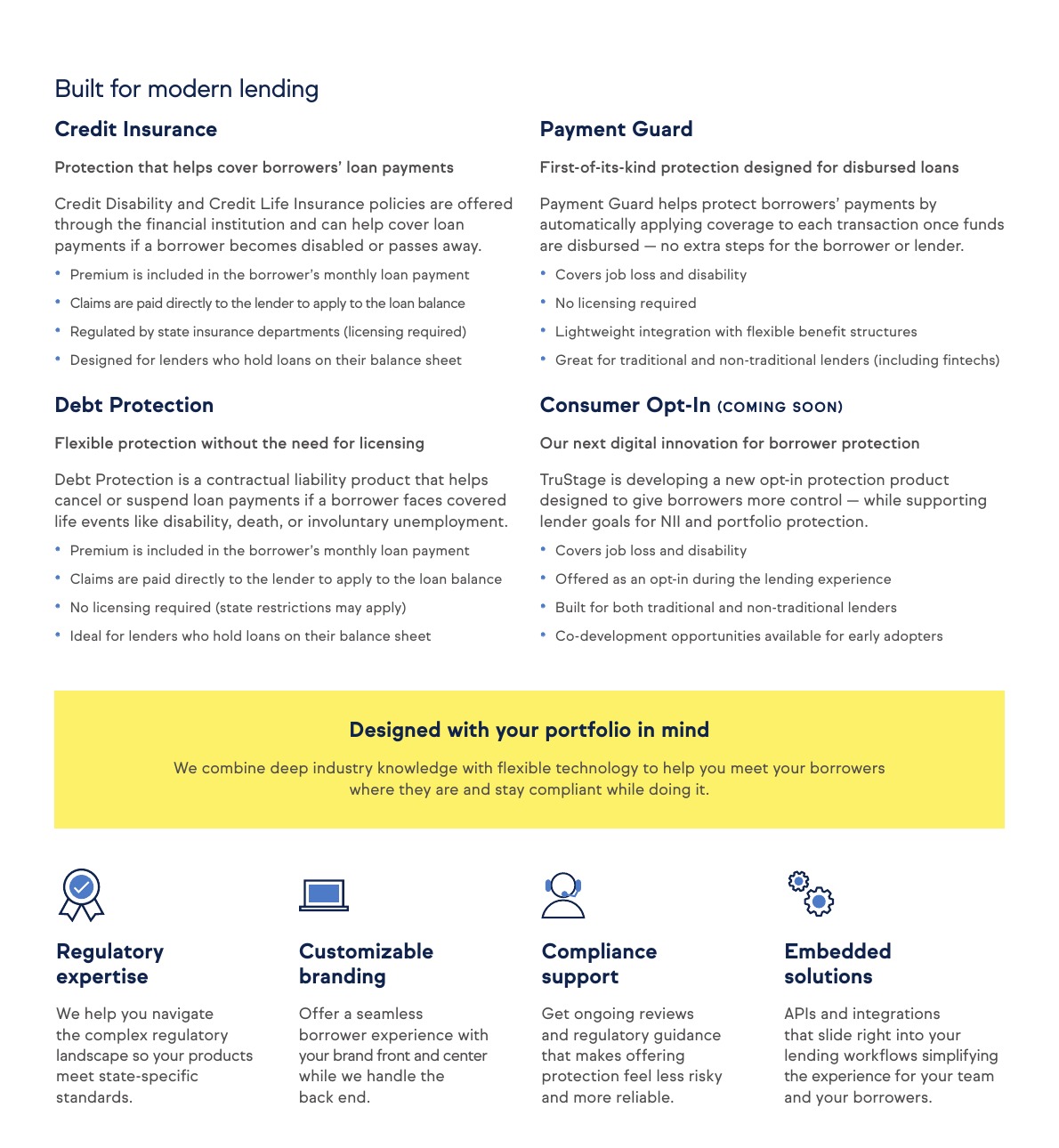
Credit insurance. Debt protection. Payment Guard. A pipeline of things not launched yet. The story had to hold for all of them at once, and it had to hold in four directions: inside the company, out to credit unions, out to lenders, and eventually down to the borrower.
A known sore spot
A VP called it exactly that. A senior manager put it plainer: people had been asking for a lending story for years, and nobody had been able to nail it.
The competition had figured this out a long time ago.
While we argued about how to describe ourselves, they were making headway doing the actual work of selling.
02The complication
Every attempt had built one document that covered everything. Each one stalled.
The draft I inherited ran six pages under four competing section headers, with a dozen people in the margins.
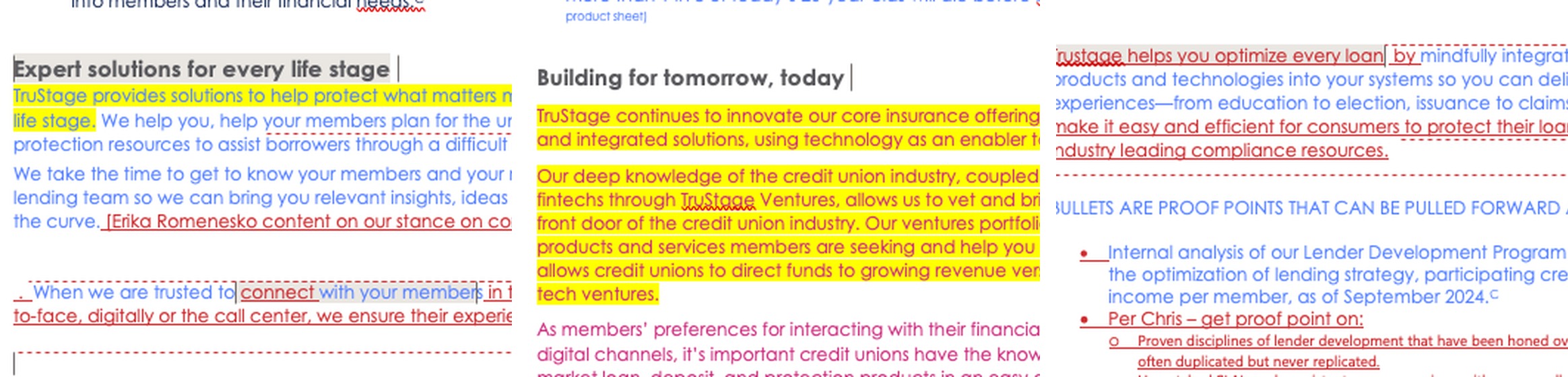
One instruction repeated throughout, in four different places: these are proof points that can be pulled forward as helpful.
03The diagnosis
This was never a writing problem. Everyone already knew what the products did. Three things were wrong at the same time.
Nobody had decided
Each group cared about a different part of it, and nobody had ever made them choose. Every review cycle added. No review cycle subtracted.
Somebody deleted a period, and it got tracked.
It didn't sound like a person
Jargon, compound sentences, needless complexity, and inside-baseball shorthand that only worked if you already knew the answer. All of it had to get steamrolled.
The test I set was an elevator pitch. A long elevator ride, sure. But you still have to get there before the doors open.
It had no visual form
You cannot judge a story in a Word document. There's no sense of how it will actually present, so it sprawls, and your eyes go blurry trying to take in everything at once.
04The work
I sat in the room with the VP and collected every piece of feedback the project had accumulated. Then I organized it instead of adding to it.
The strategy was to simplify the ask rather than build for every scenario at once. One narrative. Three pillars. One page.
Accessible digital solutions
Easy for your team. Seamless for your members.
Member-centered approach
Built around what real members want.
Proven results
Not a pilot. Not a promise. A proven solution.
Then it got a visual form, because that's the half everyone skips. Three columns, one headline, and enough white space that a reader knows where to start and when they're done.
05What changed
Validated by the VP of Marketing Strategy and the CMO. Sales rolled it out with 100% of the team on board.
Then it started producing things. A framework earns its keep when other people can build on it without asking permission.